Van der Heijden Lab
Field Inoculation Trials
2018-2021
Field Inoculation Trials
2018-2021
Introduction:
To maintain agricultural productivity while reducing the use of fertilizers and pesticides, alternative strategies are needed. One promising approach is the targeted application of probiotic microorganisms, which can enhance both nutrient availability and plant health.
A key example of this is mycorrhizal fungi. These beneficial fungi form a symbiotic relationship with plant roots by creating a network of fungal filaments in the soil. This network allows plants to access water and nutrients that would otherwise be difficult to reach. In return, the plants supply the fungi with carbohydrates produced through photosynthesis.
Particularly noteworthy are arbuscular mycorrhizal fungi (AMF), which form tree-like structures called arbuscules within plant root cells. These structures facilitate the exchange of carbohydrates and nutrients between the plant and the fungus (Fig. 1). Around 80% of all terrestrial plants can establish this symbiosis, which efficiently promotes plant growth even with reduced use of agrochemicals
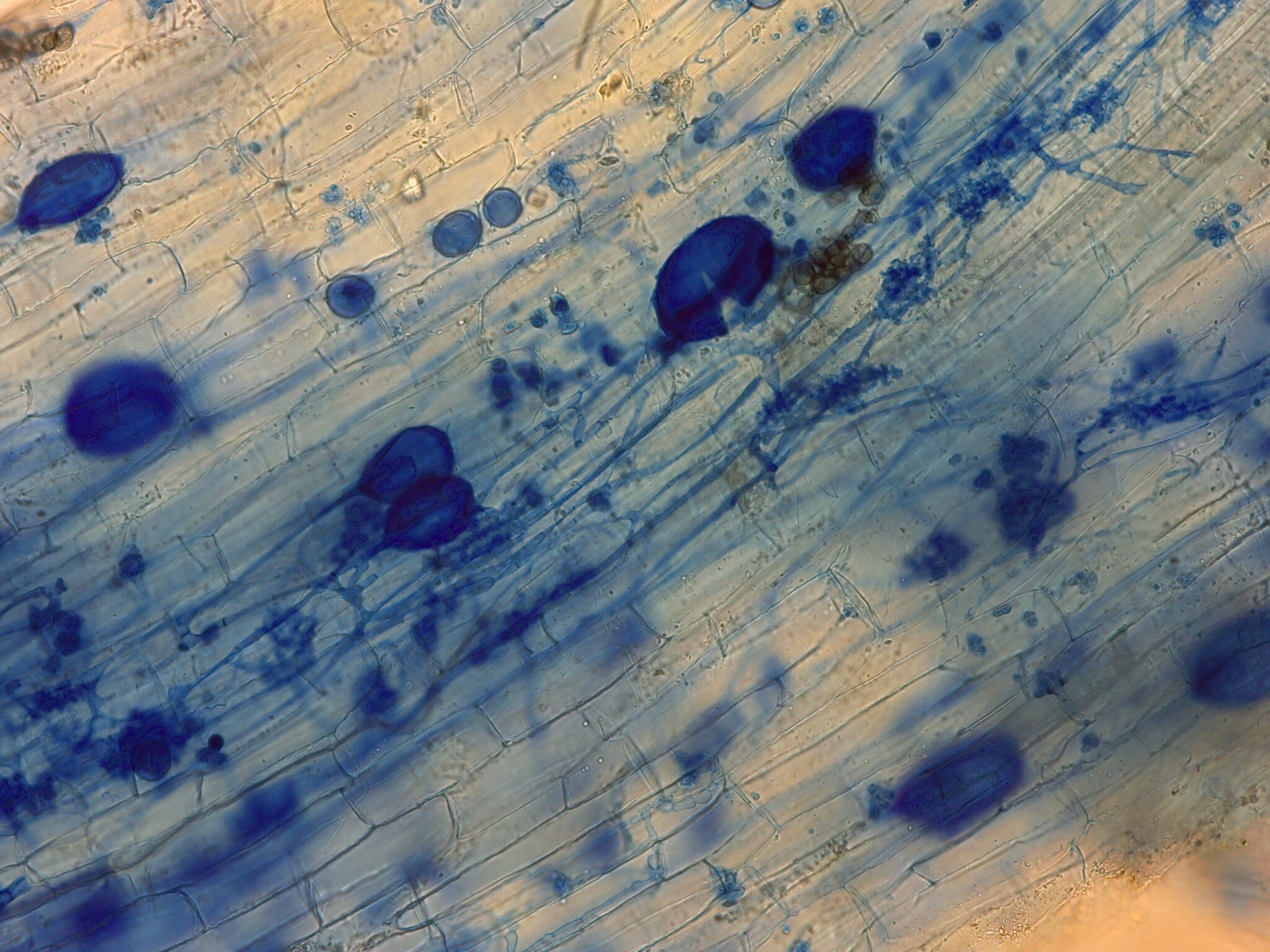
Figure 1: Stained maize root with fungal hyphae, arbuscules, and vesicles. Foto: ©Alain Valzano-Held 2023
Challenge: Estimating inoculation Success
The success of inoculation can depend on various factors, such as soil properties, local microbiota, management practices, fertilization, or crop rotation. To make inoculation worthwhile, it is essential to assess under which conditions it will be successful.
Since 2014, the Plant-Soil Interactions group has been conducting various field trials directly on commercial farms to investigate this.
Vaccination Success Varies Across Different Field Soils
The latest results from 2018 indicate that inoculation led to increased yields in some fields but was not successful in all cases. Currently, molecular methods are being used to investigate in which field soils the inoculated mycorrhizal fungi were able to successfully establish and colonize maize roots. Additionally, potential correlations between inoculation success and the biological, chemical, and physical soil properties are being examined.
Field Inoculation 2018-2022
In the spring of 2018, 2019, 2020, and 2022, a total of 71 maize fields in Switzerland were inoculated with the arbuscular mycorrhizal fungus Rhizoglomus irregulare SAF 22.
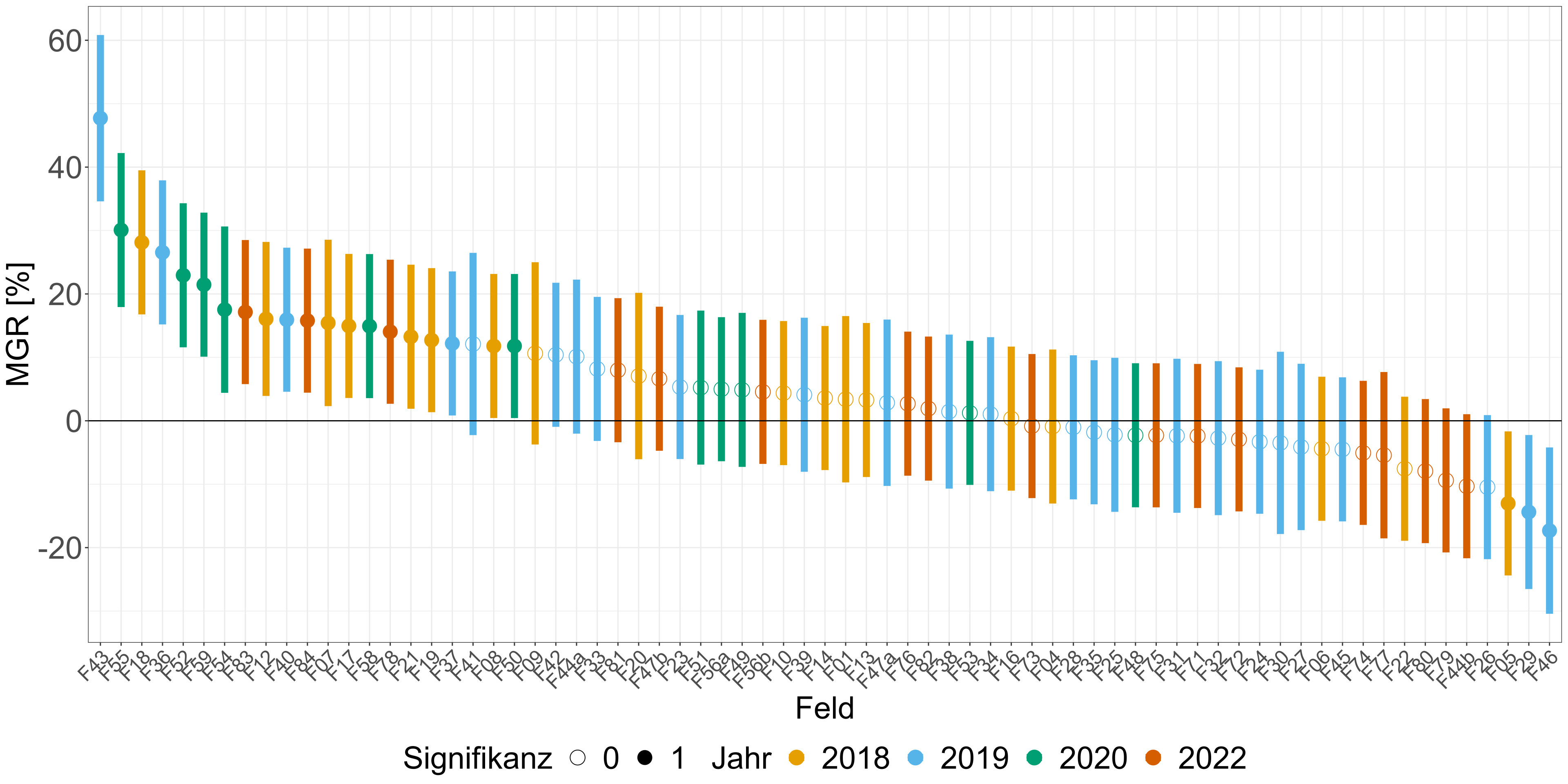
Figure 2: Mycorrhizal growth effect per plant for the years 2018, 2019, 2020, and 2022. Figure: ©Steffi Lutz 2022
Results of Field Inoculations 2018-2022:
AMF significantly increased yield in 20 out of 71 fields, with an increase of 12–40%, while a significant growth reduction of 12% was observed in three fields (Fig. 2).
Positive Effects of Inoculation
While yield increase has been a key focus in various studies—mainly because economic benefits for agriculture are most evident through yield improvements—other positive effects are gaining attention. These include drought resistance, aggregate stability, and resistance to pathogens.
Economic Feasibility
In recent scientific studies, the inoculum was manually applied using a spade over a length of 1.5 meters and incorporated into the soil. This method required a large amount of inoculum and was highly time-consuming. Although it successfully demonstrated inoculation effects, it is not practical for large-scale application due to its high labor and cost requirements. Therefore, the next step is to develop a more economically viable application method.

Funding
From 2018 to 2020, this project was funded by the Gebert Rüf Stiftung
Project team
Julia Hess (Agroscope)
Prof. Dr. Klaus Schläppi (Unibas)
Dr. Natacha Bodenhausen (FiBL & Agroscope)
Dr. Stefanie Lutz
Alain Valzano-Held (UZH & Agroscope)
Prof. Dr. Marcel van der Heijden (UZH & Agroscope)
This article was written by Alain Valzano-Held 05.03.2025
Title Foto © Julia Hess 2020
This website uses cookies. Here you can choose which cookies you want to allow and change your selection at any time. By clicking "Accept", you agree to the use of cookies.