Van der Heijden Lab
Compost Field Experiment Ehrendingen (CoFEE)
Compost Field Experiment Ehrendingen (CoFEE)
Introduction:
Agroscope and the University of Zürich are conducting a long-term study to investigate whether the addition of compost can enhance carbon sequestration and nutrient efficiency in arable farming systems. The study also examines the effects of various organic fertilizers, including digestate, compost, and slurry, as well as different fertilization levels, on soil biodiversity.
Research Questions:
- How do compost and solid digestate differ in their effects on soil quality?
- Does composting result in a more efficient overall carbon balance compared to anaerobic digestion?
- Which fertilization strategy is most carbon-efficient for targeted humus building in arable farming systems?
Experimental Setup:
The study incorporates five main treatments: a control without organic fertilizers, standard recycling compost, high-quality compost with added biochar, solid digestate, and conventional cattle slurry from the farm. Additionally, each treatment is subdivided into three fertilization levels with mineral fertilizer: the full recommended nitrogen dose, 50% of the recommended dose, and no mineral fertilization. The experiment is replicated across seven blocks, resulting in a total of 35 main plots and 105 subplots.
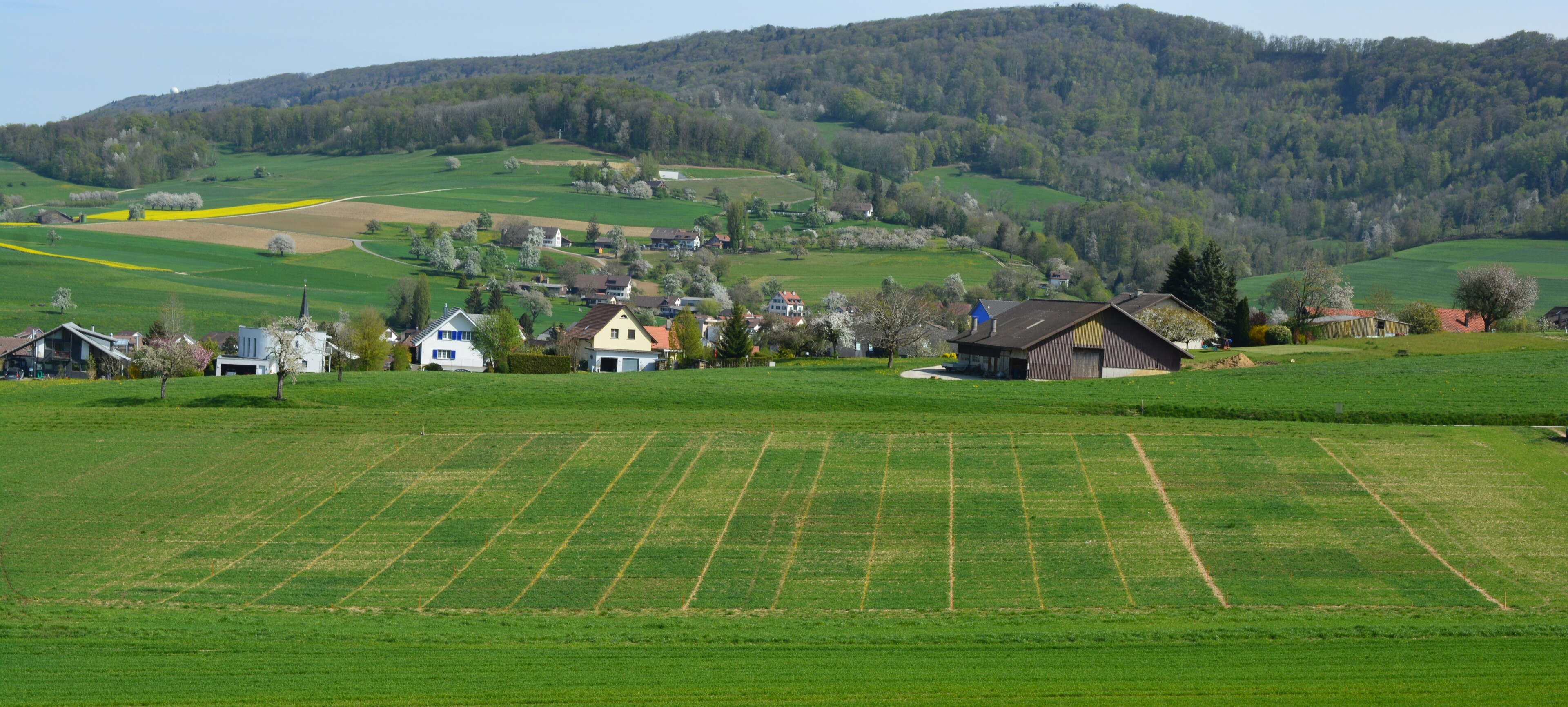
CoFEE trial with winter wheat growing in spring. The varying fertilizer levels are clearly visible by eye. Foto: © Alain Valzano-Held 2020
Background:
The Benefits for the Climate
Our soils store a large amount of carbon—more than twice as much as the atmosphere. Agriculture, forestry, and other land use practices that store carbon in the soil provide a way to mitigate climate change. Healthy soils with higher organic matter content can sequester carbon while also offering agricultural and ecological benefits.
The amount of carbon that soil can absorb depends on the soil type. For example, clay-rich soils retain organic carbon longer than sandy soils. Additionally, factors such as regional climate, soil management, and soil organism activity influence the carbon balance.
The Benefits for Farmers
Storing soil carbon directly benefits farmers by improving soil fertility, reducing erosion, and increasing resilience to droughts and floods.
Project team
Alain Valzano-Held (UZH & Agroscope)
Dany Amstutz (Agroscope)
Raphaël Wittwer (Agroscope)
Prof. Dr. Marcel van der Heijden (UZH & Agroscope)
This article was written by Alain Valzano-Held 05.03.2025
Foto Title © Alain Valzano-Held 2020
This website uses cookies. Here you can choose which cookies you want to allow and change your selection at any time. By clicking "Accept", you agree to the use of cookies.